
Healthcare Facility Cleaning and the Joint Commission: What Every EVS Director Needs to Know Before the Next Audit
Joint Commission surveys evaluate EVS on documentation, training, and quality monitoring — not just whether surfaces look clean. This guide covers what surveyors check, how HAI rates affect CMS reimbursement, and what a compliant cleaning program requires.
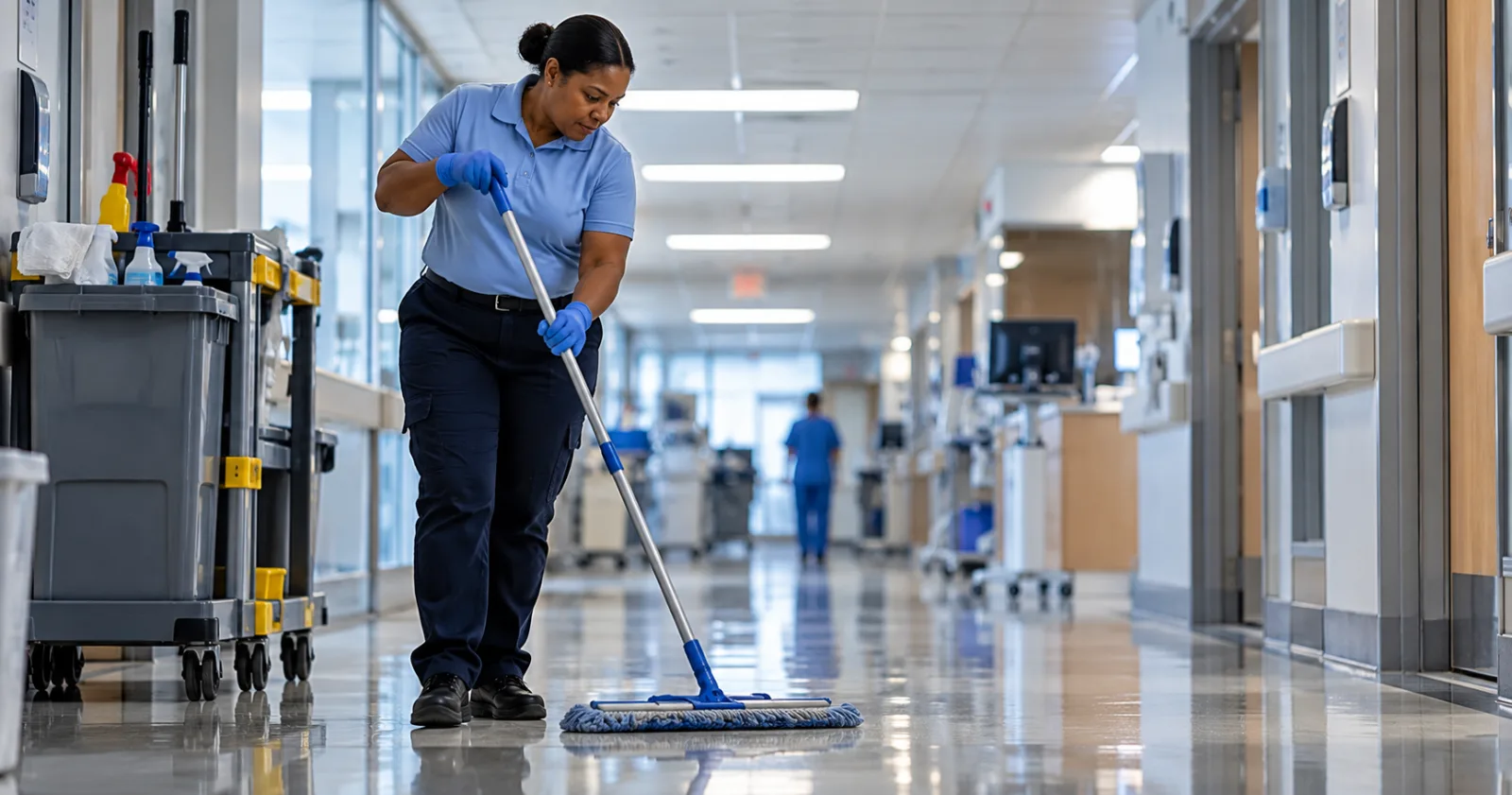
Every healthcare facility in America operates under a layer of scrutiny that most industries never encounter. The Joint Commission surveys your infection prevention program. CMS ties your reimbursement to patient outcomes. HCAHPS scores your cleanliness publicly. And every one of those mechanisms runs — in part — through your Environmental Services department.
Yet the gap between what an EVS program does and what surveyors expect to see documented is where most audit findings live. This is not a product problem or a staffing problem. It is a program structure problem.
This guide covers what Joint Commission surveyors actually evaluate in your EVS program, how your environmental cleaning protocols connect directly to HAI rates and CMS reimbursement, and what a fully compliant healthcare cleaning operation looks like in practice.
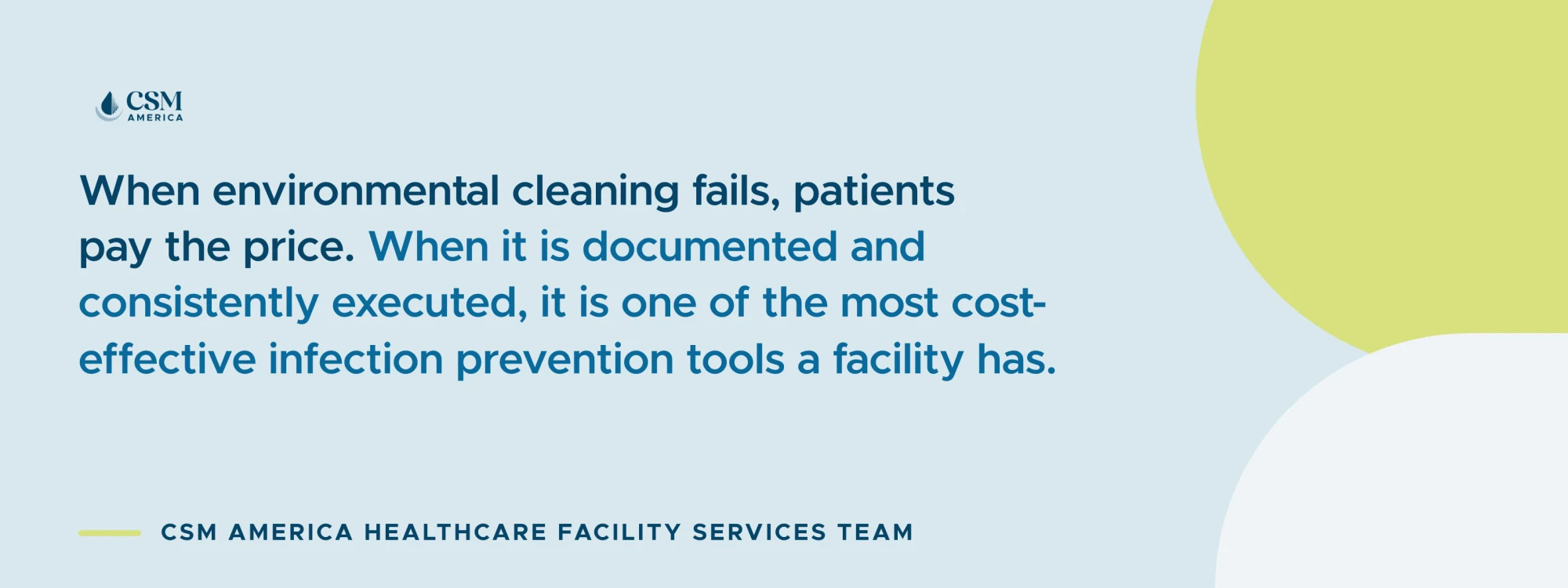
EVS Is a Patient Safety Function — Not a Housekeeping Line Item
The clinical evidence has been clear for years. Environmental contamination is one of the primary transmission routes for hospital-acquired infections. MRSA, C. difficile, CRE, and VRE survive on hard surfaces for hours to days. Every high-touch surface in a patient room — the bed rail, the call button, the IV pole, the bedside table — is a potential transmission point if cleaning protocols are not followed correctly and consistently.
That means the people cleaning patient rooms are not performing a support function. They are executing an infection control intervention. The standard they clean to, the products they use, the sequence they follow, and the documentation behind all of it are clinical decisions — not operational afterthoughts.
What the Joint Commission Actually Evaluates in Your EVS Program
Joint Commission surveyors do not work from a cleanliness checklist. They audit your program structure — whether it is documented, whether staff can demonstrate it, and whether the results are being measured. Here are the four areas where most EVS programs are tested.
1. Infection Prevention and Control Program Integration
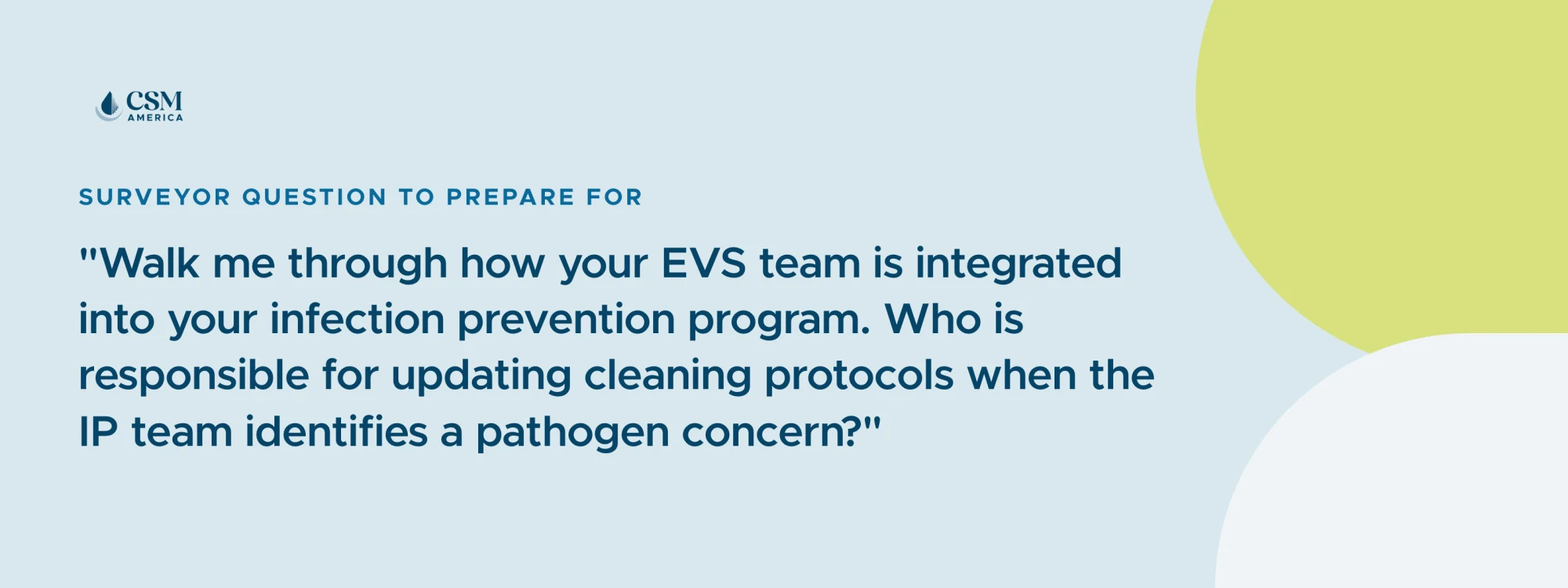
The Joint Commission's IC standards require that environmental cleaning be coordinated with the facility's infection prevention program — not operated independently. Your EVS protocols must be developed in collaboration with IP and nursing leadership. Disinfectant selection and cleaning frequency must be tied to each area's risk profile. And your EVS supervisor must have a defined role in the facility's HAI response protocols. Surveyors will ask who is responsible for updating cleaning procedures when IP identifies a new pathogen concern. Your team needs a clear, immediate answer.
2. Area-Specific Cleaning Protocols by Risk Level
A single cleaning standard applied facility-wide is not sufficient. Joint Commission surveyors expect written, area-specific protocols stratified by clinical risk — operating rooms and ICUs cleaned differently from patient rooms, which are cleaned differently from waiting areas and administrative offices. Each area's protocol must define the products used, their dilution rates, dwell times, the cleaning sequence, and the frequency. "We clean everything the same" is a finding waiting to happen.
3. Staff Training and Competency Documentation
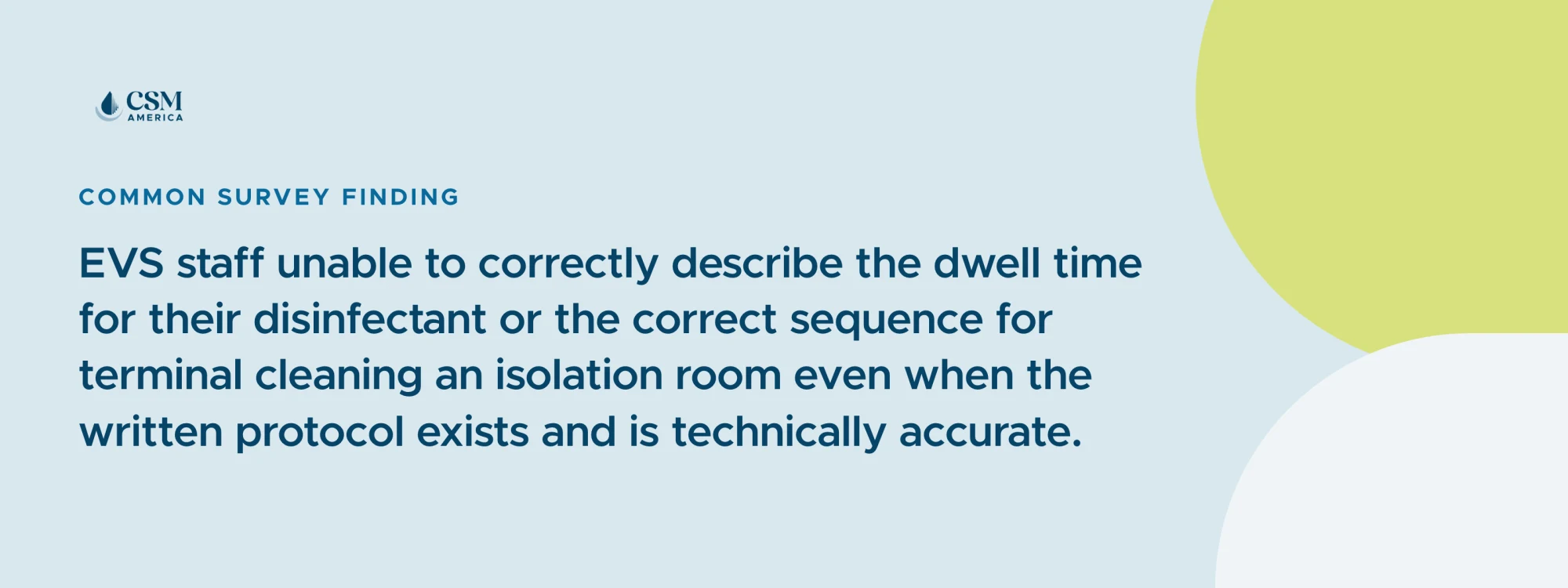
Joint Commission surveyors will speak directly with frontline EVS staff — not just the director or supervisor. They expect every team member to know the cleaning sequence for their assigned area, the disinfectant products in use, the correct dwell times, and the protocol when an isolation flag is in place. This knowledge must come from documented training. Initial competency verification before independent assignment. Annual re-competency, with records maintained and accessible during survey. Proof that protocol updates — new products, new pathogens, procedural changes — were communicated to staff and retrained.
4. Quality Monitoring and Outcome Measurement
Your EVS program needs to measure its own performance, not just complete tasks. The Joint Commission expects documented evidence that your cleaning is working. The CDC's recommended method is ATP bioluminescence testing, which measures biological load on a surface and returns a result in relative light units (RLU). The target is an 80% pass rate below 500 RLU across surfaces tested. Fluorescent marking audits and direct observation scoring are also accepted. And HCAHPS cleanliness scores — patient perception of facility cleanliness — are a publicly reported metric tied directly to CMS value-based purchasing.
The CMS Connection: How Your EVS Program Affects Reimbursement
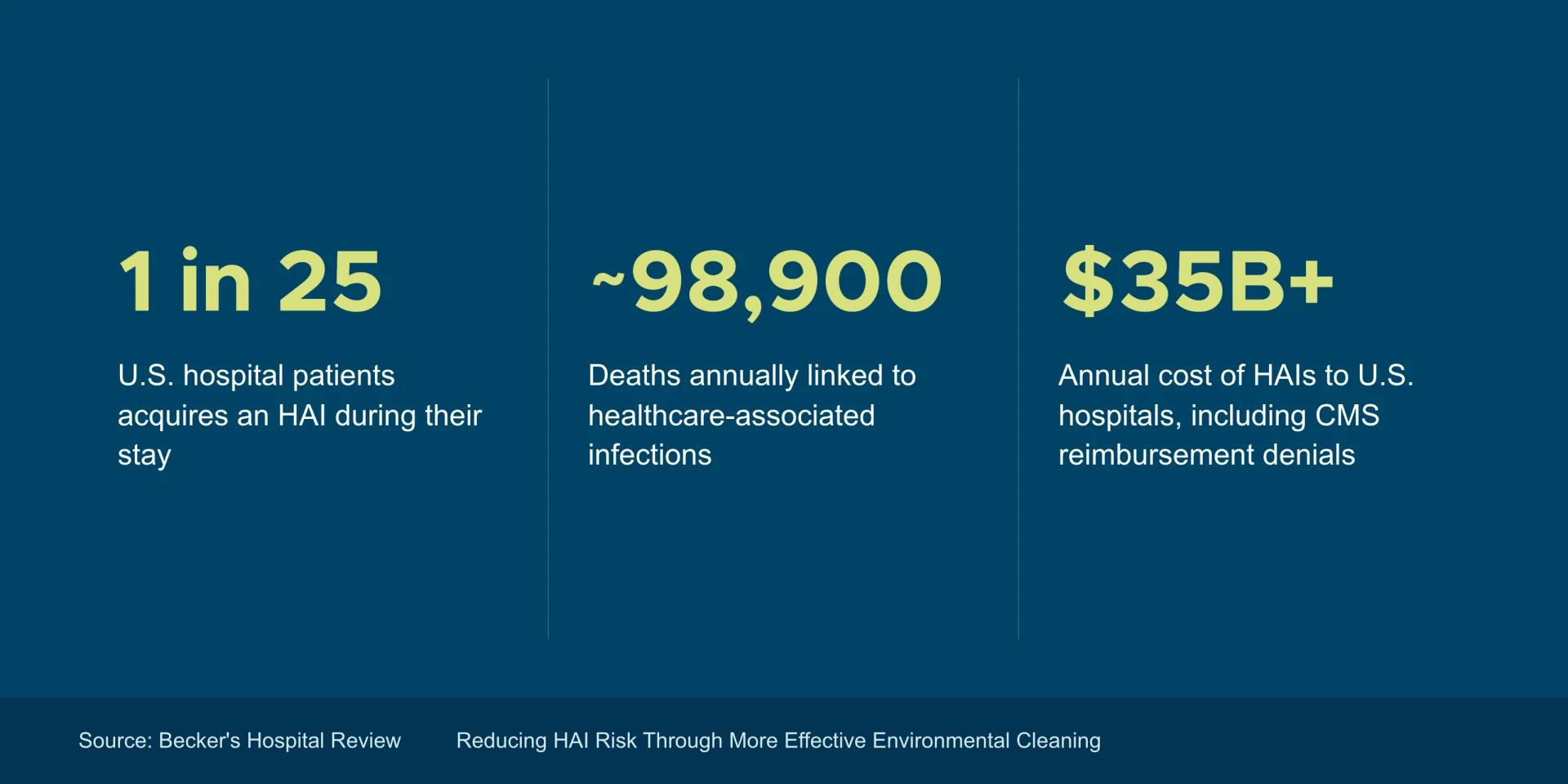
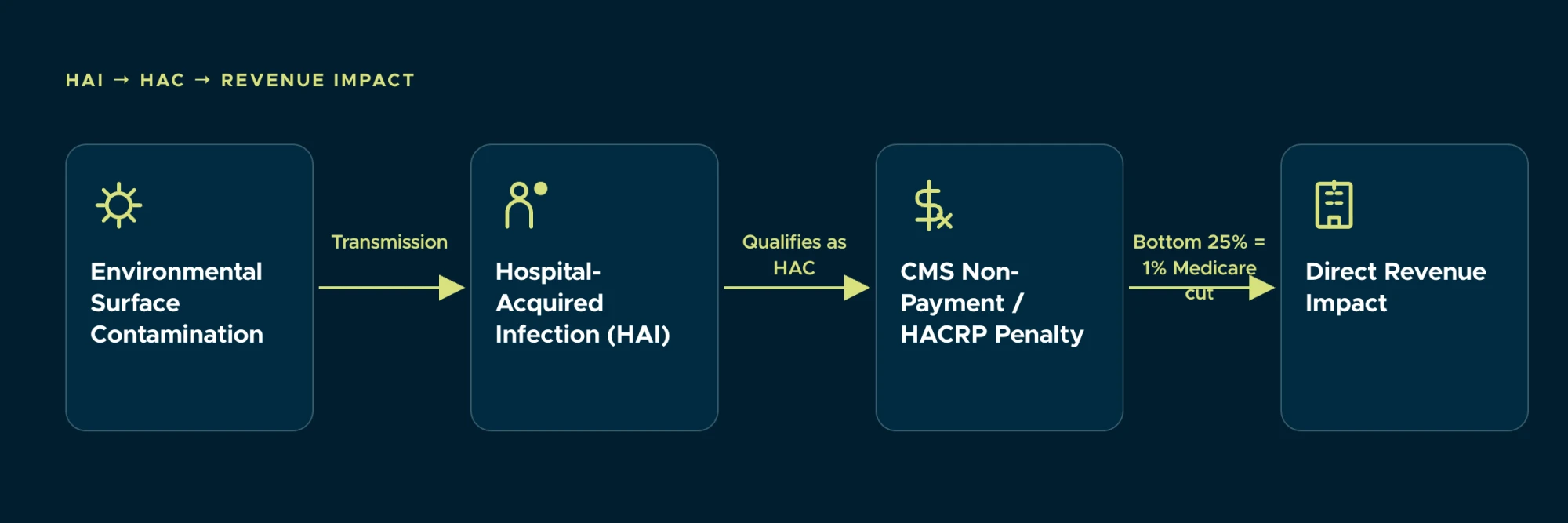
HAIs are not just a clinical problem. They are a reimbursement problem. CMS has built two direct financial penalties into the healthcare payment system, and both trace back to environmental cleaning performance.
CMS Non-Payment for Hospital-Acquired Conditions
CMS does not reimburse hospitals for the additional cost of treating certain preventable hospital-acquired conditions. Catheter-associated urinary tract infections (CAUTIs), central line-associated bloodstream infections (CLABSIs), and surgical site infections (SSIs) are all on the non-payment list. When a patient acquires one of these infections during their stay, the hospital absorbs the full treatment cost with no additional reimbursement.
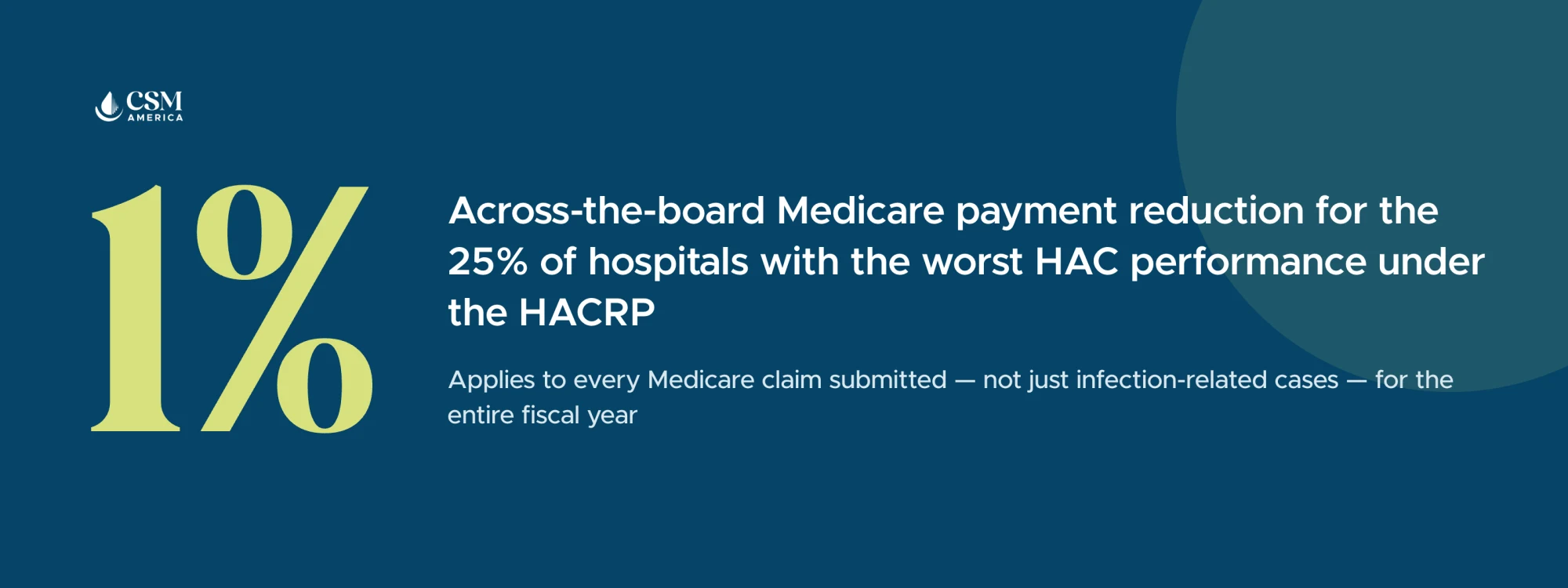
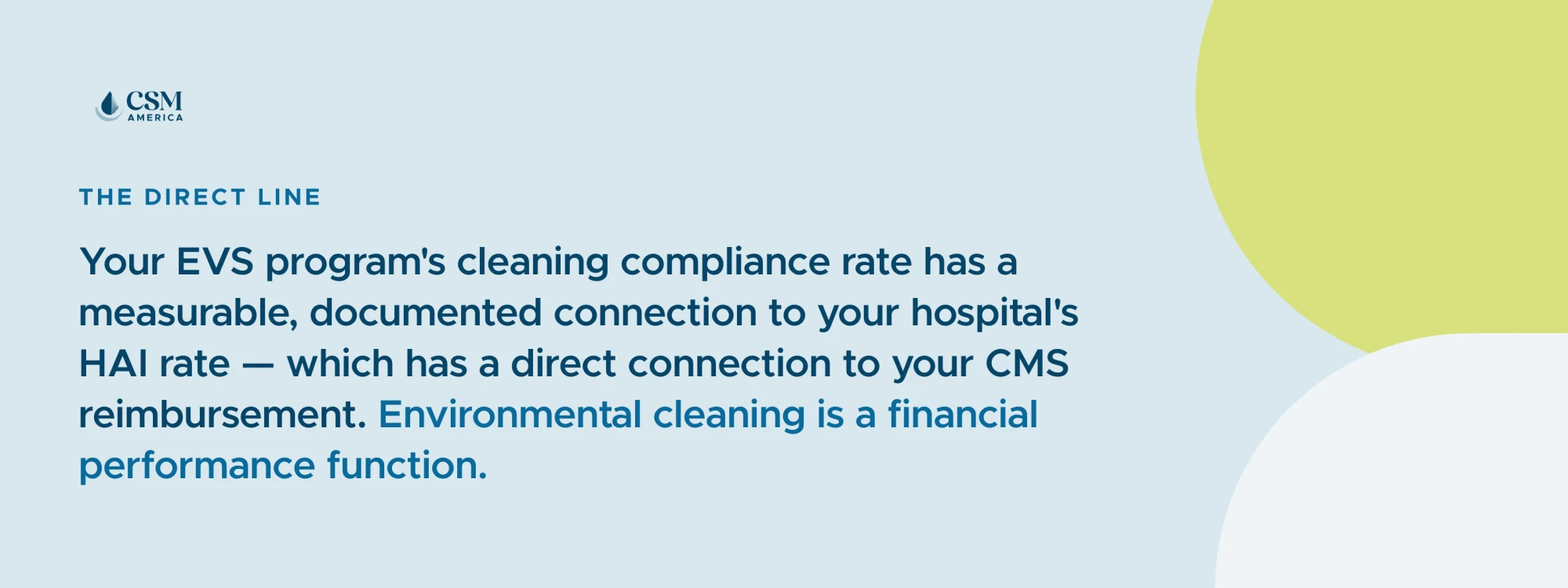
For a mid-size hospital processing tens of thousands of Medicare claims annually, a 1% reduction represents millions of dollars in lost revenue — applied across the board, not just to infection-related admissions. The connection is direct: cleaning compliance → HAI rate → HAC designation → CMS penalty.

The 5 Most Common Joint Commission EVS Findings — and How to Prevent Each One
These are not hypothetical risks. They are the documented findings that appear most frequently in Joint Commission EVS surveys across U.S. healthcare facilities.
1. Undocumented Disinfectant Dwell Times
Products must be applied at the correct dilution and allowed to remain wet on the surface for the manufacturer's specified contact time. Staff who wipe a surface dry immediately after application — or who cannot tell a surveyor what the dwell time is — create a documented finding. Post dwell times on every cleaning cart. Include them in competency verification. Surveyors will ask.
2. Inconsistent Terminal Cleaning of Patient Rooms
Terminal cleaning — the thorough disinfection of a room after patient discharge — is one of the highest-scrutiny areas in any Joint Commission survey. The sequence, products, and verification must be documented for every room turn. Inconsistency across staff or shifts is the most common root cause of findings in this category. A written protocol is not enough if execution varies.
3. Improper Chemical Storage and Labeling
Cleaning chemicals must be stored in labeled, secure containers with current Safety Data Sheets accessible. Unlabeled spray bottles — even when filled with an approved product — are a finding. Secondary containers must be labeled every time they are filled. Equipment storage rooms are inspected for cleanliness, proper segregation, and SDS accessibility.
4. Mop and Equipment Contamination
Microfiber mop heads used in a patient care area must be laundered between uses or be single-use disposable. A mop head used in an isolation room and then used in an adjacent patient corridor is a contamination pathway and a direct finding. Equipment storage areas are checked for proper segregation of clean and soiled items.
5. No Quality Monitoring Data on File
An EVS program that cannot produce recent quality monitoring results — ATP logs, fluorescent audit records, or direct observation scores — has no documented evidence that it is working. Without data, the program is operating on trust. Joint Commission surveyors do not accept trust as a compliance mechanism. Quality monitoring records must exist, be current, and be accessible during survey.
What a Joint Commission-Ready EVS Program Looks Like in Practice
The difference between an EVS program that passes Joint Commission survey and one that generates findings is almost never the cleaning products used. It is the documentation, training consistency, and accountability structure around the people doing the work.
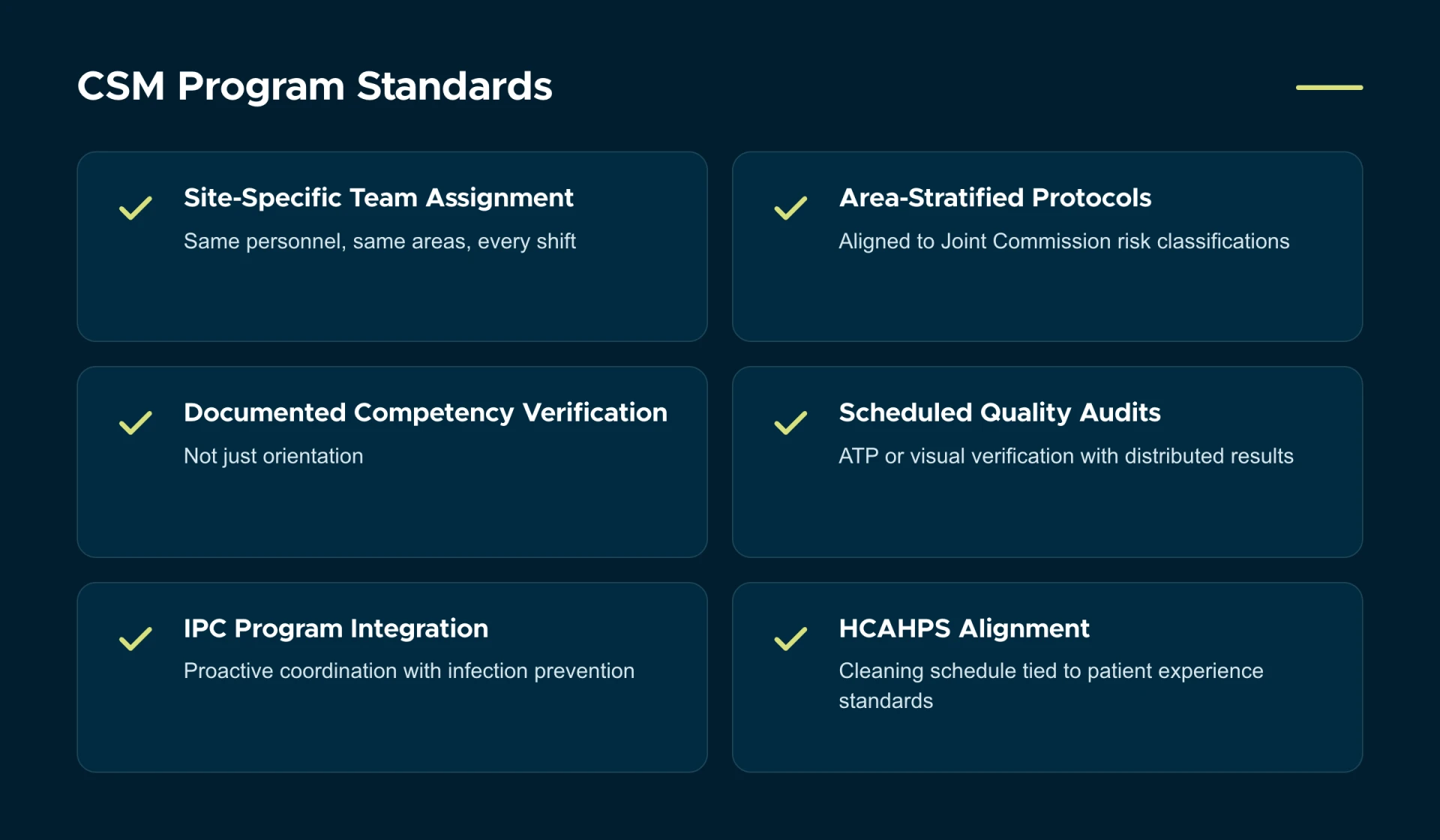
CSM America's Healthcare EVS Approach
CSM America has managed environmental services and facility operations for healthcare facilities, aviation environments, and regulated commercial spaces since 1994. We hold NMSDC, DBE, ACDBE, GDOT, and ALDOT certifications — and we have operated at Hartsfield-Jackson Atlanta International Airport, one of the most scrutinized compliance environments in the country.
Our healthcare EVS model assigns the same team to the same areas every shift. Protocols are written by area risk classification in coordination with your facility's infection prevention team. Every staff member is competency-verified before independent assignment. Quality inspection reports are delivered on schedule — not produced reactively when you ask for them.
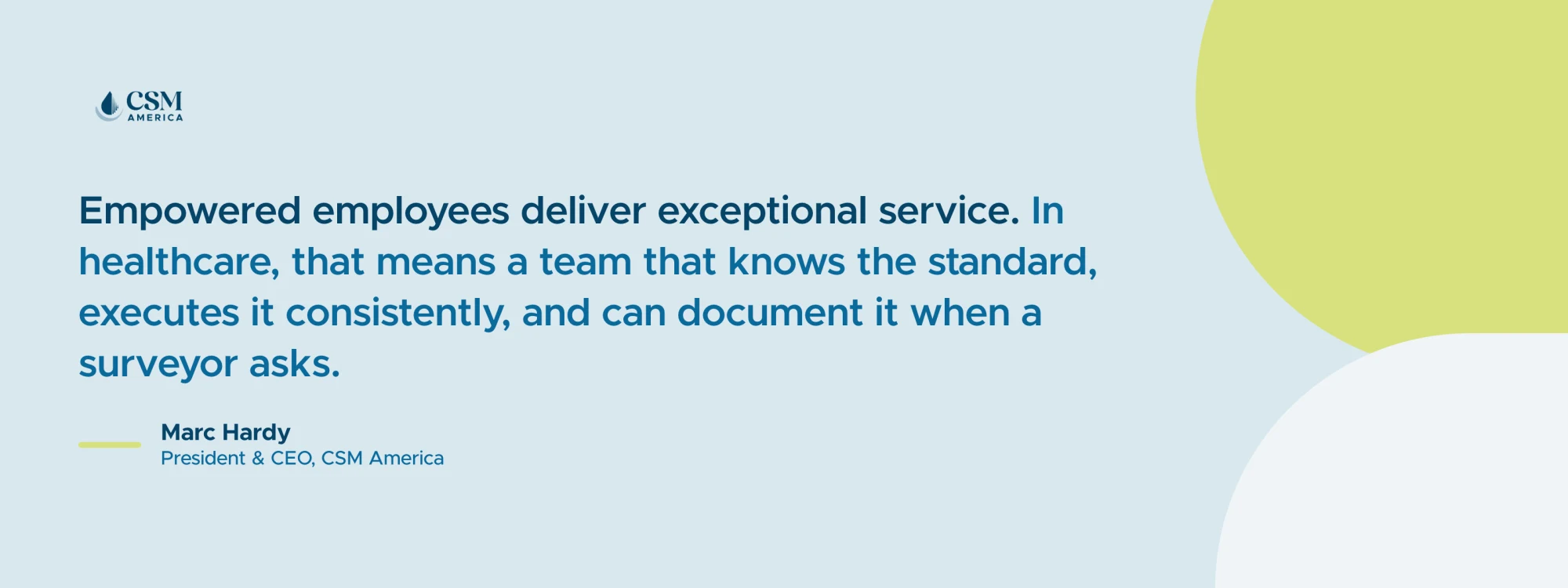
Ready to Evaluate Your Healthcare EVS Program?
CSM America offers a no-obligation facility assessment for healthcare organizations in Atlanta, Georgia and across the Southeast. Our team will review your current EVS program against Joint Commission standards, identify documentation and protocol gaps, and give you a clear picture of what a professionally managed healthcare cleaning partnership looks like.
Schedule your healthcare EVS assessment →
Frequently Asked Questions
What does the Joint Commission look for in an EVS program during a survey?
Surveyors evaluate whether your environmental cleaning program is documented, integrated with your infection prevention program, trained to by all EVS staff, and verified through objective quality monitoring. They will inspect written protocols, staff training records, and quality monitoring data. They will also speak directly with frontline EVS staff to confirm that they can describe their procedures correctly — not just that the protocol document exists.
How do HAI rates connect to CMS reimbursement?
CMS does not reimburse hospitals for the additional cost of treating certain preventable hospital-acquired conditions, including CAUTIs, CLABSIs, and SSIs. Hospitals in the bottom 25% of HAC performance are penalized with a 1% reduction on all Medicare payments for the fiscal year through the Hospital-Acquired Condition Reduction Program (HACRP). Your environmental cleaning compliance directly affects your HAI rates and, through those rates, your CMS revenue.
What is ATP testing and why does it matter for Joint Commission compliance?
ATP (adenosine triphosphate) bioluminescence testing is the CDC-recommended objective method for verifying surface cleaning in healthcare settings. A testing device measures the biological load on a surface and returns a result in relative light units (RLU). The CDC target is an 80% pass rate below 500 RLU. ATP testing gives your EVS program documented, objective evidence of cleaning performance — the kind surveyors expect to see when they ask for quality monitoring data.
How often should healthcare facility surfaces be cleaned?
Frequency depends on area risk classification. Critical areas — operating rooms, ICUs, isolation rooms — require terminal cleaning after each patient or procedure and continuous attention to high-touch surfaces throughout the shift. Semi-critical areas such as patient rooms require daily cleaning at minimum and a full terminal clean between patients. General areas require scheduled cleaning with documented frequency. All protocols must be written, area-specific, and matched to clinical risk.
Does CSM America provide EVS services for healthcare facilities in Atlanta?
Yes. CSM America provides specialized cleaning and facility management services for healthcare facilities in Atlanta, Georgia and across the Southeast. Our protocols are built to Joint Commission standards and our team is competency-verified before independent assignment. Visit csmamerica.com/contact-us to discuss your facility's needs.
Stay Updated with Our Insights
Get a tailored solution for your maintenance needs with our expert services.

- Company Info
- About Us
- Careers
- News & Resources
- Support Links
- Contact
- FAQ
- Sitemap
- NAVEX
- Uniform Ordering